Why Is My Boiler Leaking Water—and Can It Be Repaired?
In A Flash Heating & Plumbing · Homeowner Guide
A puddle by the boiler.
What happens next?
Finding water around your boiler is unsettling, especially when you need the heat. Before assuming the whole system needs replacement, the first question is simple: where is the water actually coming from?
The short answer: Some boiler leaks can be repaired by addressing a valve, seal, or connected pipe. A leak involving the boiler’s cast-iron sections or heat exchanger needs a different assessment. The source, extent of damage, and overall condition determine the right solution.
Water under the boiler does not tell the whole story
A puddle shows where water ended up—not necessarily where it started. Water can travel along a pipe or the boiler jacket before dripping onto the floor. Nearby plumbing can also make a boiler appear to be leaking.
For homeowners in Medford and surrounding Greater Boston communities, identifying the heating system and tracing the leak come before deciding on repairs. Take photos from a safe distance, including a wide shot and a close-up of visible moisture. Leave covers, fittings, and controls in place.
Why might your boiler be leaking water?
Pipes, fittings, and valves
A connection, drain valve, or nearby heating pipe may be leaking while the boiler itself remains sound. Corrosion, worn seals, and damaged components can require repair or replacement of the affected part. Tightening an old fitting without knowing its condition can make the situation worse.
Relief-valve discharge
Water from a relief-valve discharge pipe needs investigation. On a hot-water system, excessive pressure may involve the expansion tank or fill controls; the relief valve itself may also be faulty. Replacing the valve alone may not address the cause. Never cap, plug, or obstruct the discharge.
Pumps, air vents, or seals
Hot-water heating systems have circulation components and connections that can develop leaks. Moisture around a pump flange, air vent, or gasket may call for a focused repair. The surrounding components should also be checked for damage caused by the water.
The boiler itself
Leaks involving a cast-iron section, section connection, or heat exchanger are more involved. Depending on the model and condition, a manufacturer-approved repair or component replacement may be possible. Extensive deterioration can make complete boiler replacement the better long-term choice.
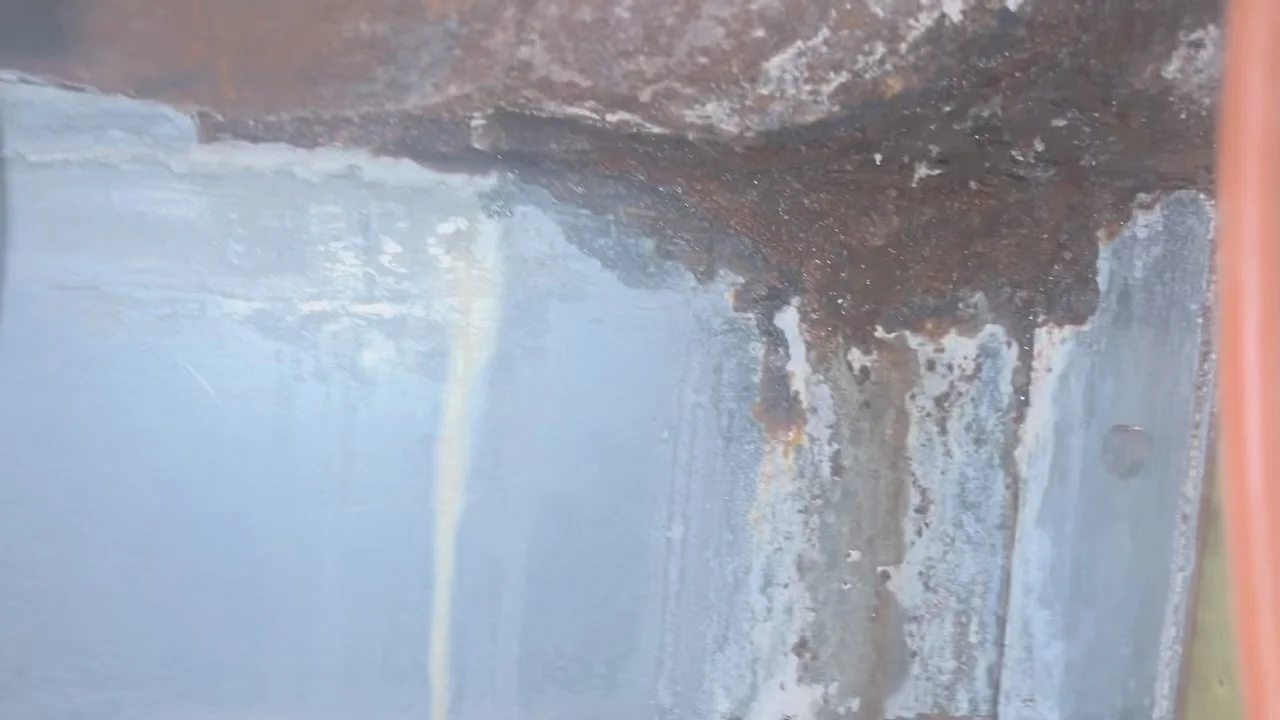
Have a condensing boiler? These systems intentionally produce condensate, which should leave through a designated drain. A problem with the trap, drain tubing, or condensate pump can create a puddle without proving that the heating-water side is leaking. Water escaping onto the floor still needs attention.
Steam boiler leaks vs. hot-water boiler leaks
Steam heating
Water heats into steam, travels through the system, and returns as condensate. Leaks can involve the boiler, radiator connections, vents, or return piping—including piping that is difficult to see.
Unusually frequent water feeding deserves investigation, even without a visible puddle. Some losses occur as steam. Do not assume repeated refilling is simply part of winter operation.
Hot-water heating
Heated water circulates through baseboard, radiators, or other heating surfaces. Leaks may appear at piping, pumps, vents, or the boiler. Pressure behavior can help a professional identify the problem.
If the pressure keeps dropping, our guide to why a boiler loses pressure explains related causes. Pressure loss alone does not identify the leak location.
Steam and hot-water boilers operate differently. Do not apply a pressure setting or filling procedure from another system to yours.
Can a leaking boiler be repaired?
Often, a repair is worth considering—but “the boiler is leaking” is not enough information to choose one. A sound recommendation should explain what failed, what the repair addresses, and what condition the rest of the system is in.
Repair may make sense when…
- The source is a replaceable valve, seal, pump connection, or pipe.
- The boiler’s main components remain in serviceable condition.
- The underlying pressure or control problem can be corrected.
- Approved parts are available and the scope is reasonably predictable.
Replacement deserves a look when…
- Inspection finds extensive corrosion or significant boiler-body damage.
- Major leaks or expensive failures keep returning.
- Parts availability or disassembly makes a repair impractical.
- A substantial repair would leave other badly deteriorated components in service.
Age matters, but it is not the only deciding factor. Compare the actual repair scope, remaining condition, warranty coverage, and replacement options. Our boiler repair-versus-replacement guide goes into that decision in more detail.
What about a temporary repair or section replacement?
On some sectional boilers, an approved seal repair or replacement section may be an option. Feasibility depends on the model, available parts, access, and the condition of adjoining sections and connections.
With an older, deteriorated boiler, opening it can reveal additional damage or connections that cannot be reused. A repair estimate should account for that uncertainty rather than promise that replacing one part will solve everything.
A temporary measure should only be considered if a qualified professional determines the system can operate safely. It is not a guarantee of another heating season. If replacement is appropriate, our boiler installation and repair services can help you evaluate the next step.
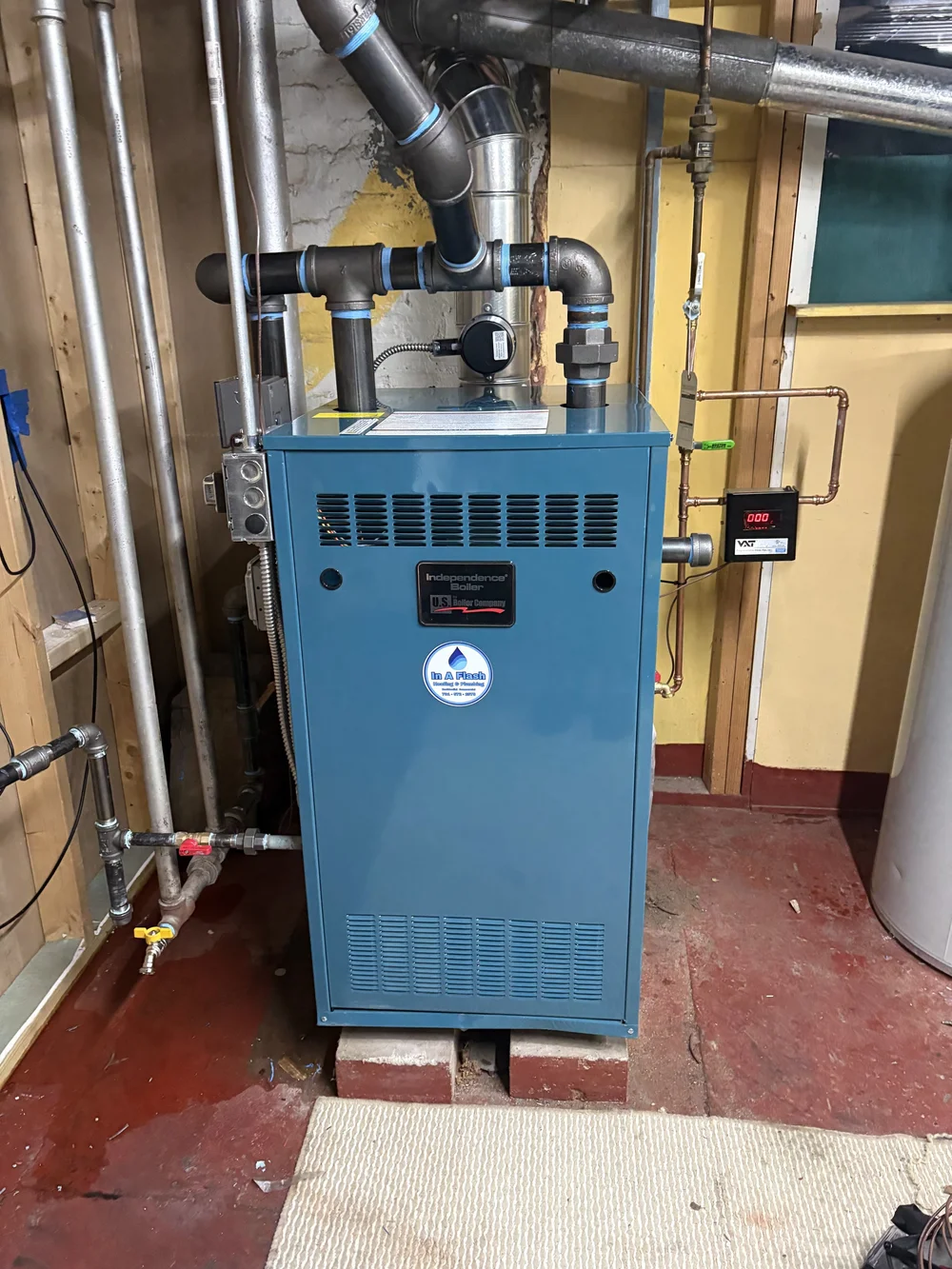
What should you do if your boiler is leaking?
- Keep away from hot water, steam, and wet electrical components. Do not reach into the boiler or stand in water to access a switch.
- For an active boiler leak, shut the system down if you can do so safely. Use the identified boiler emergency/service switch from a dry location. If you cannot safely reach it, keep clear and get assistance.
- Call for service and describe what you see. Explain whether it is a drip or steady flow, when it happens, and whether the heat has stopped. Send photos if safe.
- Avoid improvised fixes. Do not plug a relief pipe, bypass a safety control, repeatedly reset the boiler, or add stop-leak chemicals without manufacturer-approved professional guidance. Never add cold water to an overheated or dry boiler.
Gas odor or a carbon monoxide alarm? Leave the building immediately. Do not operate switches or troubleshoot the boiler. Call 911 or the gas utility’s emergency line from outside.
Even a small recurring drip should be checked promptly. A bucket may contain some water, but it does not establish that the boiler is safe to run. If heat must remain off in freezing weather, tell the service provider so freeze protection can be addressed.
Boiler leak FAQs
Does a leaking boiler always need replacement?
No. A leaking valve, fitting, or connected pipe may be repairable. A leak from the boiler body or heat exchanger needs a separate assessment of the damage, approved repair options, and overall condition.
Can I keep using my boiler if it is only dripping?
Do not assume a small drip is safe. The source matters more than the puddle size. For an active boiler leak, shut the system down if you can safely reach its identified service switch from a dry location, and contact a qualified professional.
Why does my boiler leak only when the heat runs?
Heating changes temperature and pressure, which can make some leaks appear or worsen during a cycle. On a hot-water system, relief-valve discharge may involve an expansion or pressure-control issue. Inspection is needed to identify the cause.
Does water from the relief pipe mean the valve is bad?
Not necessarily. The valve may be releasing excessive pressure, or the valve itself may be faulty. The system needs diagnosis before parts are replaced. Never cap, plug, or obstruct a relief-valve discharge pipe.
How much does a boiler leak repair cost?
The cost depends on the source, access, required parts, and condition of the equipment. A pipe or valve repair is a different scope from replacing a boiler section or the entire boiler. An inspection is needed for a meaningful estimate.