Tank vs. Tankless Water Heaters in Massachusetts: Which Is Right for Your Home?
Tank vs. Tankless Water Heaters in Massachusetts: Which Is Right for Your Home?
If you’re replacing your water heater, one of the first questions you’ll face is: Should I stick with a traditional tank, or upgrade to tankless?
For homeowners in Medford and Greater Boston, the answer depends on your home’s size, usage habits, budget, and long-term goals. In this guide, we’ll break down the real differences between tank and tankless systems so you can make a confident decision.
If you're already planning a replacement, our Water Heater Installation & Replacement services can help you evaluate the right option for your home.
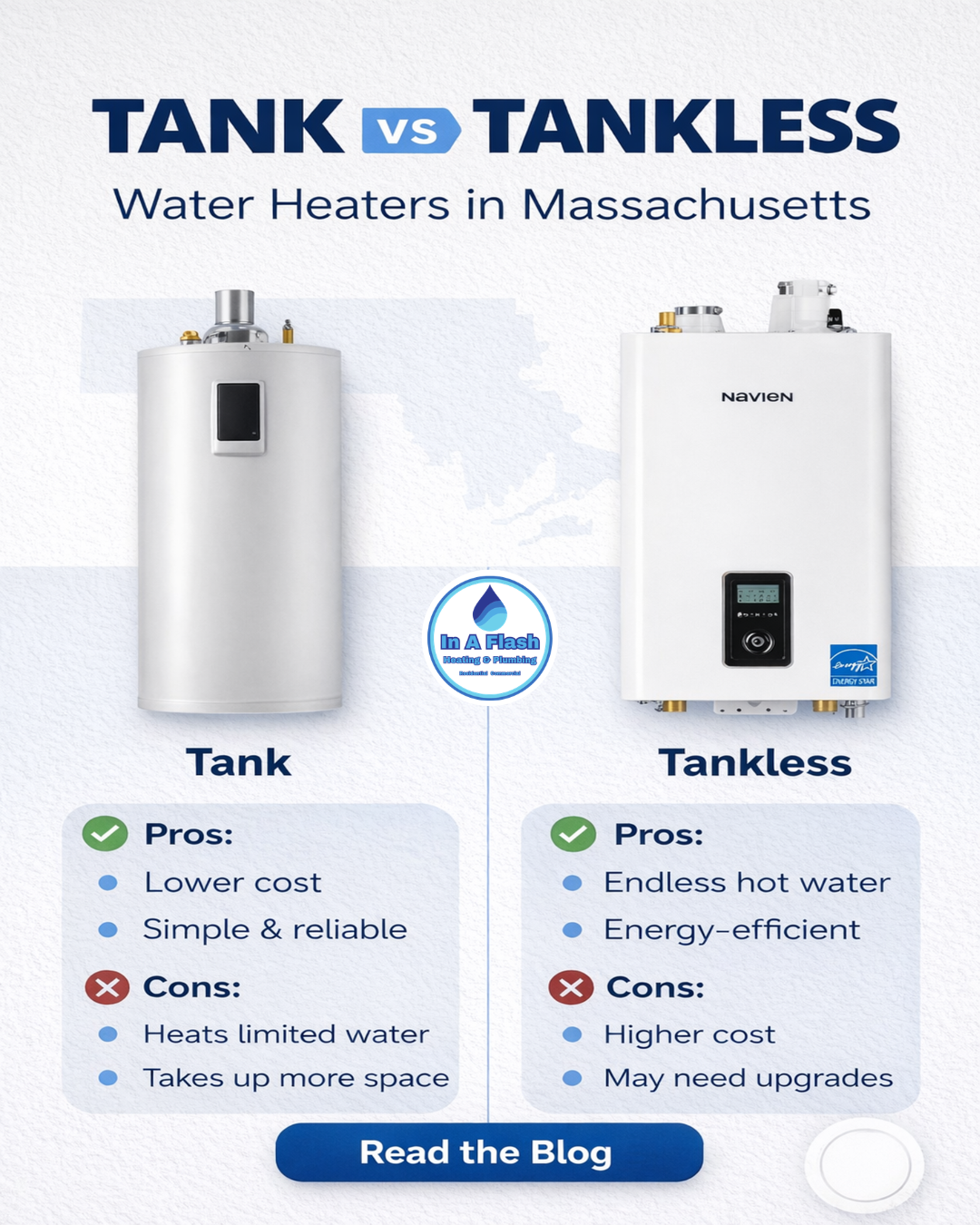
How Traditional Tank Water Heaters Work
Tank water heaters store and heat a set amount of water — typically 40–50 gallons for most Massachusetts homes.
Pros:
Lower upfront installation cost
Simple and familiar technology
Reliable performance
Cons:
Can run out of hot water during heavy use
Less energy-efficient over time
Takes up more physical space
For many households, a properly sized tank system works perfectly well — especially in smaller homes or properties with moderate hot water demand.
How Tankless Water Heaters Work
Tankless systems heat water on demand. Instead of storing hot water, they heat it instantly as it flows through the unit.
Pros:
Endless hot water
More energy-efficient
Compact wall-mounted design
Longer lifespan than tank systems
Cons:
Higher upfront cost
May require gas line or venting upgrades
Installation can be more involved
In homes with larger families or high simultaneous usage (showers + laundry + dishwasher), tankless systems can be a strong upgrade.
Which Is Better for Massachusetts Homes?
Here in Massachusetts, colder groundwater temperatures mean water heaters work harder than in warmer climates.
That makes:
Proper sizing critical
Professional installation especially important
Venting and gas capacity a real consideration for tankless systems
Homes in Medford, Somerville, and Malden often benefit from evaluating insulation, plumbing layout, and usage patterns before choosing a system.
If you’re unsure which direction makes sense, our team can assess your home and walk you through both options before installation.
When to Replace Your Water Heater
You may want to start planning replacement if:
Your unit is 10–15 years old
You’re noticing rust-colored water
Hot water runs out quickly
You see leaking or corrosion around the tank
If your system fails unexpectedly, our Emergency Plumbing services can help stabilize the situation and prevent water damage.
Final Thoughts
Both tank and tankless water heaters have advantages. The “right” choice depends on your home, your budget, and how you use hot water daily.
If you're considering a replacement in Medford or the surrounding Massachusetts area, planning ahead can save you money and prevent inconvenient breakdowns.
👉 Contact us to discuss the best solution for your home.
❓ FAQ SECTION
Is tankless really more efficient than tank?
Yes, tankless systems typically use less energy because they only heat water when needed. However, installation costs are higher.
How long do tank and tankless water heaters last?
Tank systems usually last 8–12 years. Tankless systems can last 15–20 years with proper maintenance.
Does Massachusetts cold water affect tankless systems?
Yes. Colder incoming water means the unit must work harder, which is why proper sizing is critical in New England homes.